
Home › Services › Groundwork › Foundation Digging
Foundation Digging & Footings in Milton Keynes, Bedford & Northampton
In short
Building an extension, a garden room or an outbuilding starts in the ground. Before any brick goes down, the footings have to be dug to the right depth, square and in the right place, and the spoil has to go somewhere. Steve digs foundations across Milton Keynes, Bedford, Northampton and the villages between, with his own machines, and he drives them himself.
MK Landscaping Services has been Steve’s business since 2008, working from Dagnall Rd in Olney. Extension footings are one of the jobs he is called out for most. Usually the builder is booked, the footings are first on the schedule, and the homeowner needs them dug, squared up and cleared before the bricklayer turns up.
What foundation digging involves
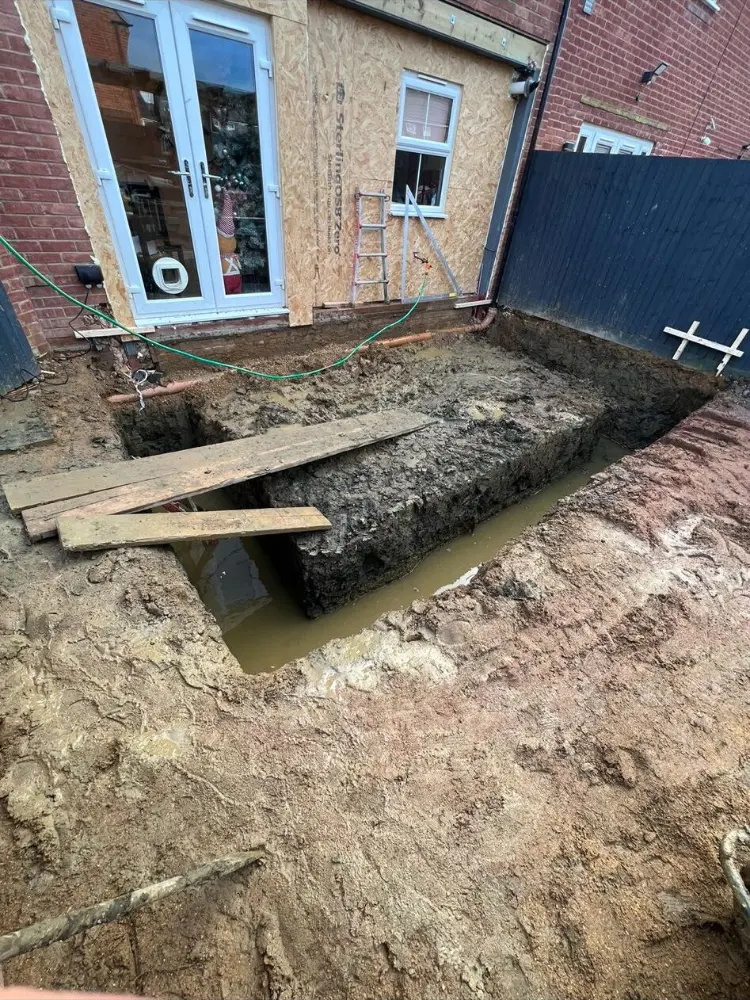
Foundation digging means excavating the trenches that a building’s footings sit in. For a house extension that usually means strip foundations or trench-fill footings, typically 600 mm to 1,000 mm deep.
Accuracy matters more than speed. Footings need to be accurate to within a few centimetres. Dig too wide or too deep and you pay for concrete you did not need. Dig in the wrong place and you start again. Your builder or engineer sets the depth and the line, and Steve digs to it.
Doing this by hand is possible on a very small job, but it is slow, and holding a consistent depth along the whole run is hard work. A 2 tonne mini digger does the same work in a fraction of the time and leaves straight, even trenches. Footings are one of the most common jobs in Steve’s groundwork service, and he digs them himself as part of his man and digger hire.
Footings jobs Steve does
Extension footings
The most common foundation job. House extensions, where the footings are the first thing on the build schedule. Steve digs them, squares them up and gets the spoil off site so the next trade starts on a clean, ready trench.
Garden room and outbuilding bases
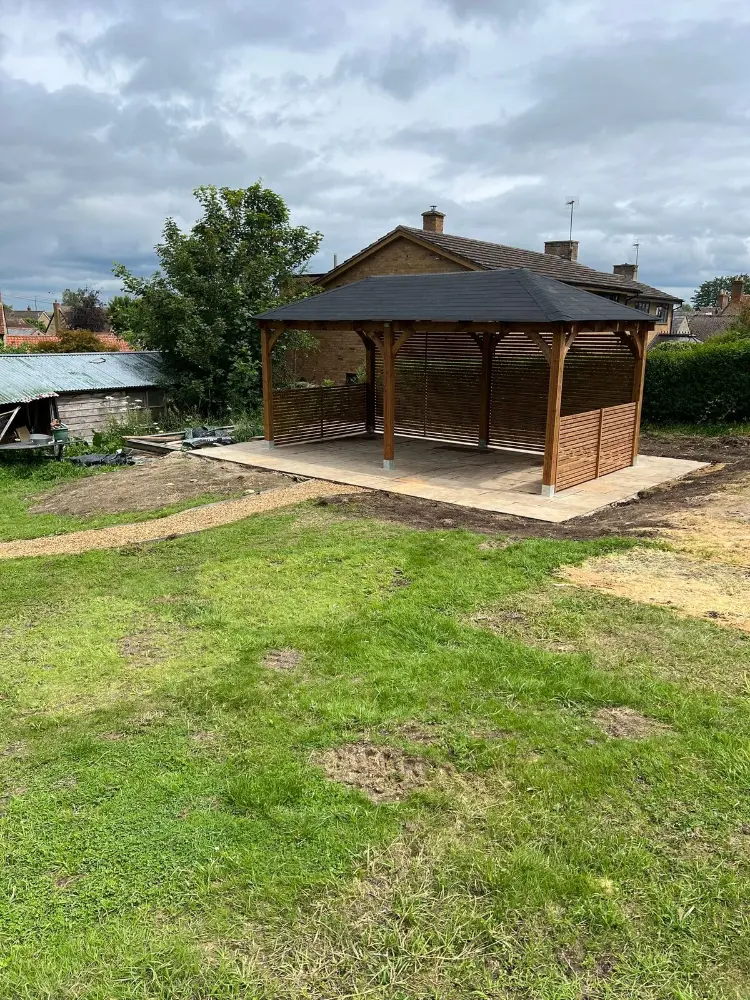
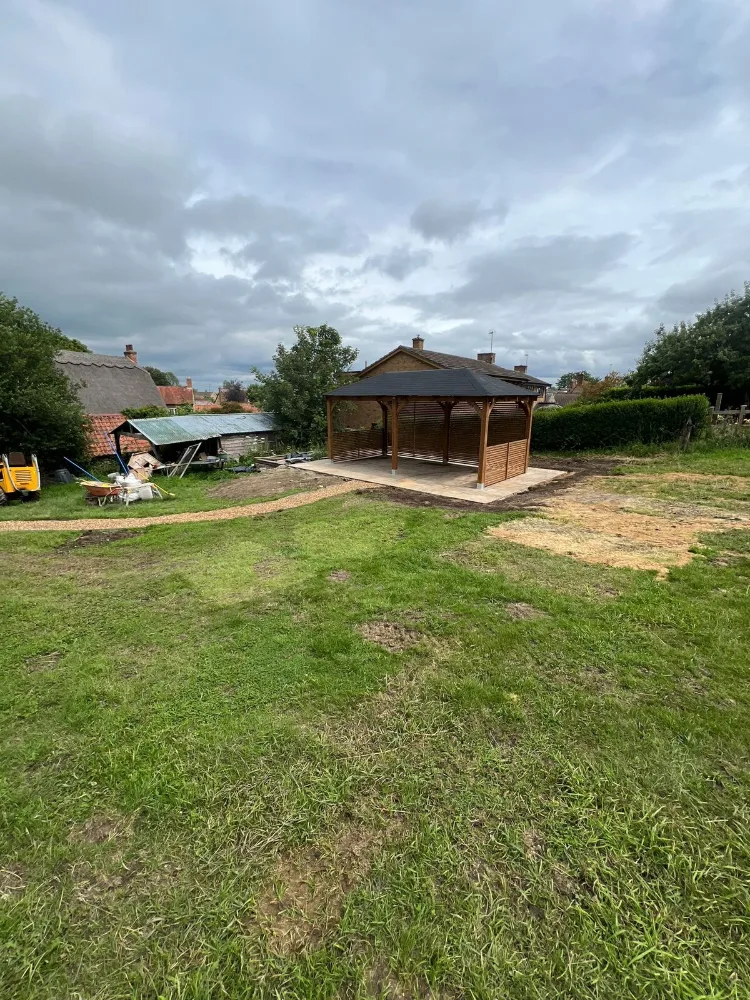
Garden rooms, studios and larger sheds need a proper base. Steve digs out and levels the ground for the base, and for any path leading to it. The garden room base photos on this page show bases dug, compacted and levelled ready for the building.
Clearing the ground first
Plenty of footings jobs start with something in the way: an old patio, a slab from a shed that came down years ago, stumps or roots. A mini digger with a breaker attachment or a ripper tooth clears that before the footings are dug, so there is one machine and one visit. Clearance, footings and bases are all part of the same groundwork job.
Spoil handled as part of the job
A run of extension footings produces a lot of muck. It can go into a skip, onto a grab lorry, or be moved by the tracked dumper to another part of the garden if you can use it there. Agree which before the day, and Steve plans the dig around it.
The machines for footings
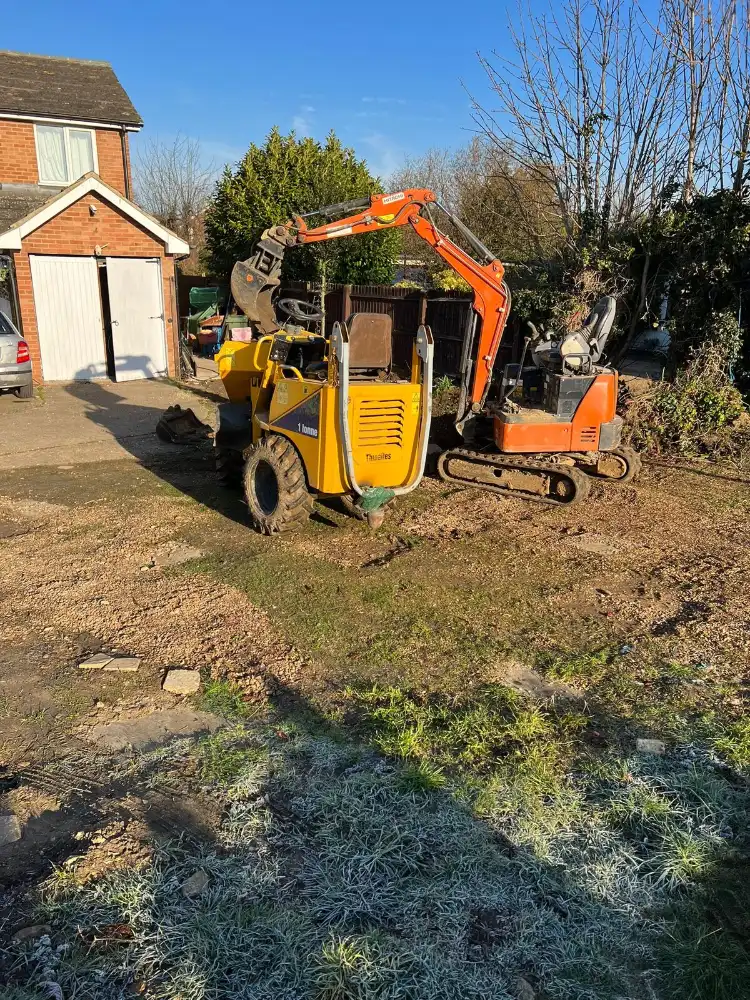
2 tonne mini digger
Most footings jobs. Enough power for clay, hardcore and old concrete, and compact enough for a typical back garden. Needs about 120 cm of access on most sites.
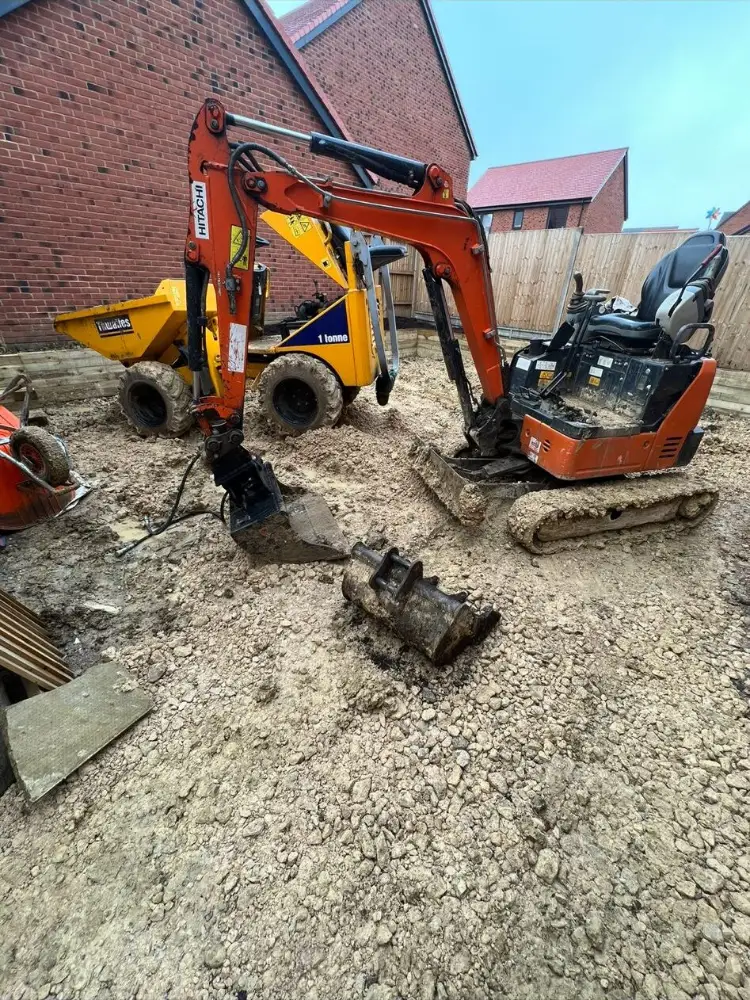
1 tonne Bobcat micro digger
When the only way to the back is a narrow side gate or passage. Gets through gaps of 72 cm.
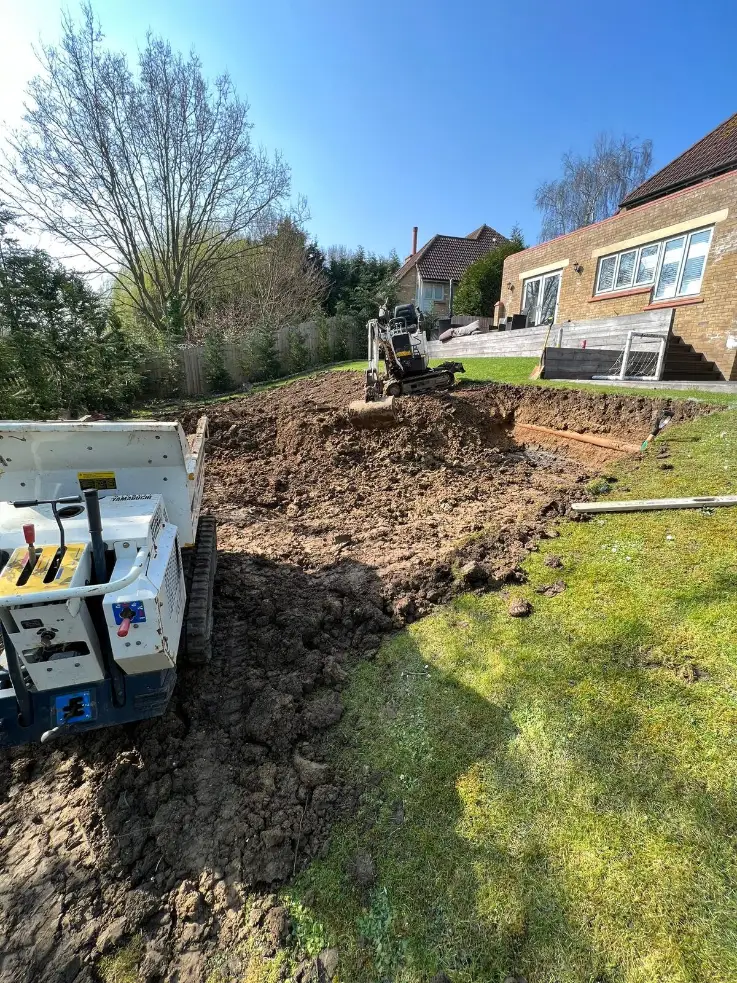
Tracked dumper
Moves spoil from the trench to the skip or tip area, a tonne at a time, without rutting the lawn.
If your access is tight, say so when you first get in touch. It decides which machine comes, and a back garden behind a narrow gate can still have its footings dug by machine. How tight-access jobs work is set out on the micro digger and driver hire page.
See footings in action
The photos on this page are from Steve’s own jobs: extension footings dug square and boarded ready for concrete, and a garden room base dug, compacted and levelled, seen from several angles.
Areas we cover for foundation digging
Steve covers Milton Keynes, Bedford, Northampton and the towns and villages between, from his base in Olney.
Bedford
A lot of extension footing work in the MK40 and MK42 postcodes, and in villages such as Kempston, Biddenham and Bromham. Older properties here often have narrow side access, which is where the micro digger comes in. Bedford footings and bases are covered under groundworks in Bedford.
Milton Keynes
Newer estates in places like Wolverton, Newport Pagnell, Stony Stratford, Bletchley and Willen usually have wider access, so the 2 tonne fits. Planning where the spoil goes matters, because many estates have strict rules on skips and verge damage. Estate rules and access are covered under groundworks in Milton Keynes.
Northampton
A mix. The older terraces around Abington and Kingsley have tight access and need careful hand finishing. Newer builds out towards Wootton and Great Billing are more open. Older terraces and new estates are covered under groundwork in Northampton.
The villages between
In Olney, Emberton, Sherington, Hanslope and Ravenstone, most of Steve’s work is extension footings and garden groundwork, and access tends to be easier. Jobs around Steve’s base are covered under groundworks in Olney.
Further out, Steve has done preparation work for a building project in Chapel Brampton, north of Northampton. That customer’s review is below. The full list of towns and villages is on the areas we cover page.
What a footings job looks like, step by step
- 1Photos or a site visit
Steve looks at the access, the ground and the drawings so he knows the depth and the line.
- 2Written quote
It sets out the work, how the spoil is handled and how long the dig should take.
- 3Booked around your builder
The dig is timed to the builder’s start date so the trench is not left open longer than it needs to be.
- 4Services check and marking out
Underground services are identified and the footings are marked with paint or pegs.
- 5The dig
The bulk of the excavation by machine, to the depth on the drawings.
- 6Squaring up by hand
Corners and edges are finished by hand so the trench is clean for the concrete.
- 7Spoil away
Loaded into a skip or grab lorry, or moved by the tracked dumper to wherever you have agreed.
- 8Walk-round
Driveway, lawn and neighbouring boundaries checked before Steve leaves.
Tips that save time and money on an extension
Footings are first on the schedule, so book Steve as soon as you have the builder’s start date.
The depth and width of the footings come from the plans. Having them on the day means no guesswork.
If you have a low spot in the garden, some of the topsoil can go there instead of in a skip.
Old pipes, cables and footings from long-gone sheds turn up regularly. A walk round with Steve before the dig starts saves a headache later.
If the patio needs breaking out or a path dug for the same project, doing it on the same visit is usually cheaper than two callouts.
If the only way in is a narrow side gate, say so upfront so the right machine is booked.
Common questions
Foundation digging FAQs
Rated 4.9★ on Google from 31 reviews
What our clients say
“I needed some levelling off, foundations digging and a garden pathway digging out. Steve did a great job and got it all done in a day. He arrived bang on time and only stopped for a couple of drinks. Would recommend.”
“Steve completed preparation work for a building project in Chapel Brampton, excellent work and on time, I will be using Steve again on the next phase of the project, we were very pleased with his work.”
Ready to start?
Book your foundation digging with Steve
Got an extension or garden room coming up? Send Steve the drawings, a few photos of the access, and your builder’s start date. He will give you a written quote and book the dig around your build.
MK Landscaping Services, Dagnall Rd, Olney MK46 5BJ
Monday to Friday 8 am to 5 pm, Saturday 8 am to 4 pm