In short
If you’ve got groundwork, excavation, or any kind of digger work coming up at home, you’re in the right place. This page walks you through what a man and digger service actually covers, when homeowners genuinely need one, what to expect on the day, and how to pick someone local who’ll do the job properly without turning your garden into a mudbath.
MK Landscaping Services is run by Steve, who turns up to every job personally, drives the machine himself, and covers Bedford, Milton Keynes, Northampton, and the towns and villages in between. Most of what follows comes from doing this work day in, day out across north Bucks and Bedfordshire.
What a Man and Digger Service Actually Is
A man and digger service (sometimes called operated plant hire or digger driver hire) is exactly what it sounds like. An experienced operator turns up with a mini-digger or excavator and carries out the work you need done. You’re paying for the machine, the operator’s skill, and the time on site.
The important part is that you don’t have to touch the controls. You don’t need a CSCS card, an operator’s ticket, or any previous experience. You point at the bit of ground that needs digging, agree how you’d like the spoil handled, and let the operator get on with it. This is different from self-drive digger hire, where a machine is dropped off for you to use yourself. With a man and digger, the operator and the machine come as a package.
For most residential jobs in this area, a compact machine in the 1 to 3 tonne range is the right tool. Small enough to fit through a standard side gate, big enough to get real work done in a day.
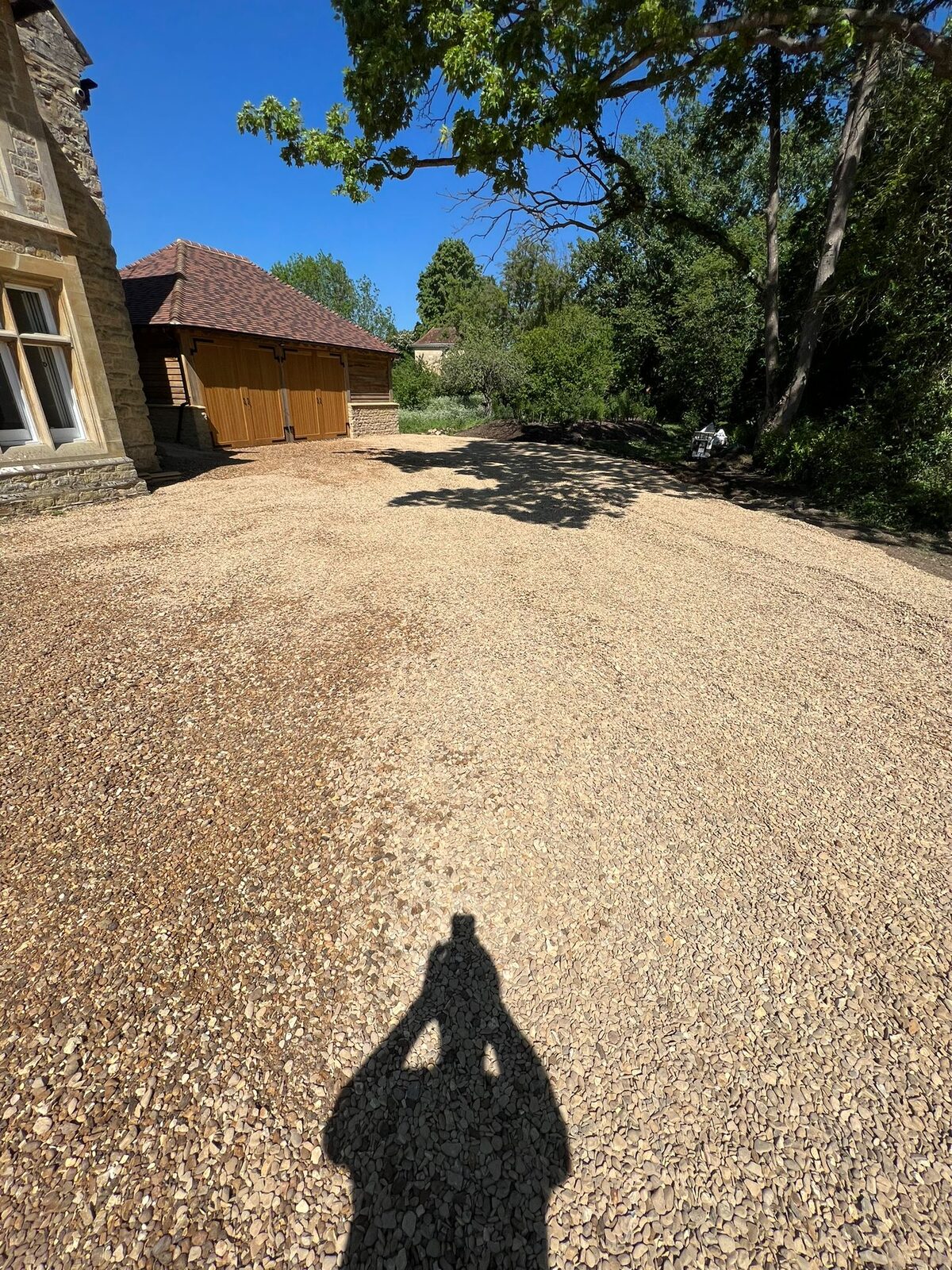
Recent work
Our Man and Digger Services
Here are the jobs that make up the bulk of residential man and digger work around Bedford, MK, and Northampton.
Foundations and Footings for Extensions
Building an extension means digging strip foundations or trench-fill footings before the brickwork starts. Footings are usually 600mm to 1000mm deep and need to be accurate to within a few centimetres. Get this wrong and you’re paying for extra concrete. Get it really wrong and you’re starting over.
This is one of the most common jobs we get called out for. Typically the builder has been booked in for a start date, the footings are the first thing on the schedule, and the homeowner needs them dug, squared up, and spoil handled before the bricklayer turns up.Footings are part of a wider groundwork job, and we handle the full scope from site clearance through to ready-for-bricklayer.
Driveway Dugouts and Hardstandings
A new driveway (block paving, resin, gravel, or concrete) needs the ground excavated to the right depth before any base material goes down. Depth depends on what’s going on top. Resin drives usually need a 150mm dig, block paving 200mm to 250mm, and anything carrying a heavier vehicle can need more.
A mini-digger gets this done in a morning for an average drive. Digging by hand is possible but you’d be at it for days, and keeping the level consistent across the whole area is a slog.
Site Clearance and Ground Preparation
Old patios, slab concrete, stumps, tree roots, concrete bases from demolished sheds. A mini-digger with a breaker attachment or a ripper tooth clears all of this in a fraction of the time it takes by hand. If you’ve inherited a garden with a load of old hardcore or a crumbling slab, this is what sorts it out.
Garden Groundwork and Landscaping Prep
Before a new lawn, a new patio, or a full landscape design can happen, the ground usually needs levelling, old material stripping out, and topsoil moving around. Landscapers often work closely with a man and digger for this phase. Steve still offers full landscaping alongside the groundwork side, so if your project bridges both, you’re dealing with one contractor from start to finish.
Drains, Soakaways, and Trenching
Digging for new drains, a soakaway crate, a French drain, or a cable trench is a classic digger job. A small machine with a narrow bucket makes short work of trenches that would take a full day of hand digging and leave your back in pieces.
The Machines That Get the Job Done
The right machine makes a big difference on a residential job. Too big and it won’t fit through the gate or will chew up the lawn. Too small and the work drags on.Steve runs a compact fleet specifically chosen for residential and small commercial work:
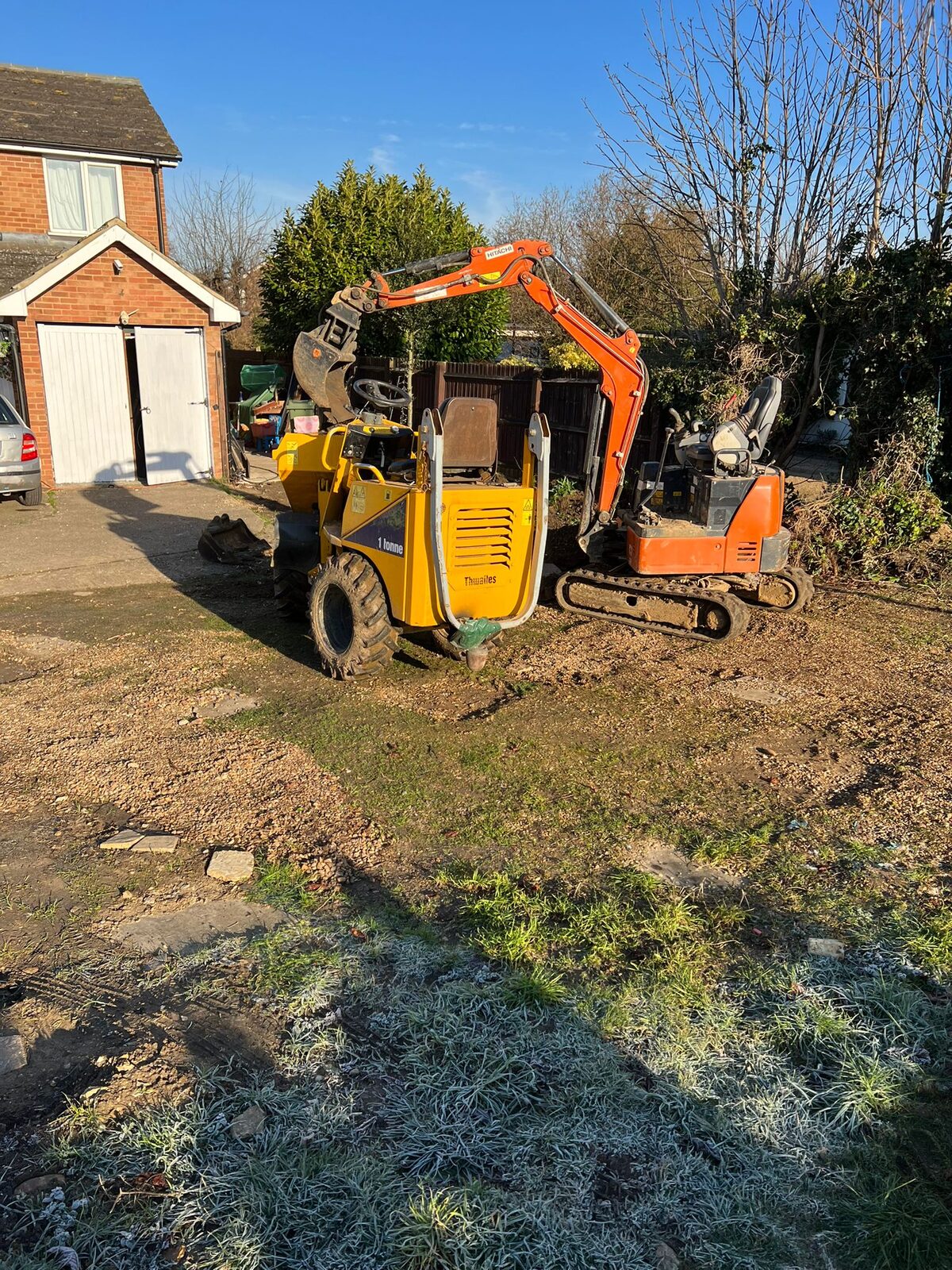
2 tonne mini digger
The workhorse. This is the machine that handles most jobs across Bedford, MK, and Northampton. Extension footings, driveway dugouts, site clearance, garden levelling. Enough power to get through clay, hardcore, and old concrete without being oversized for the average back garden.
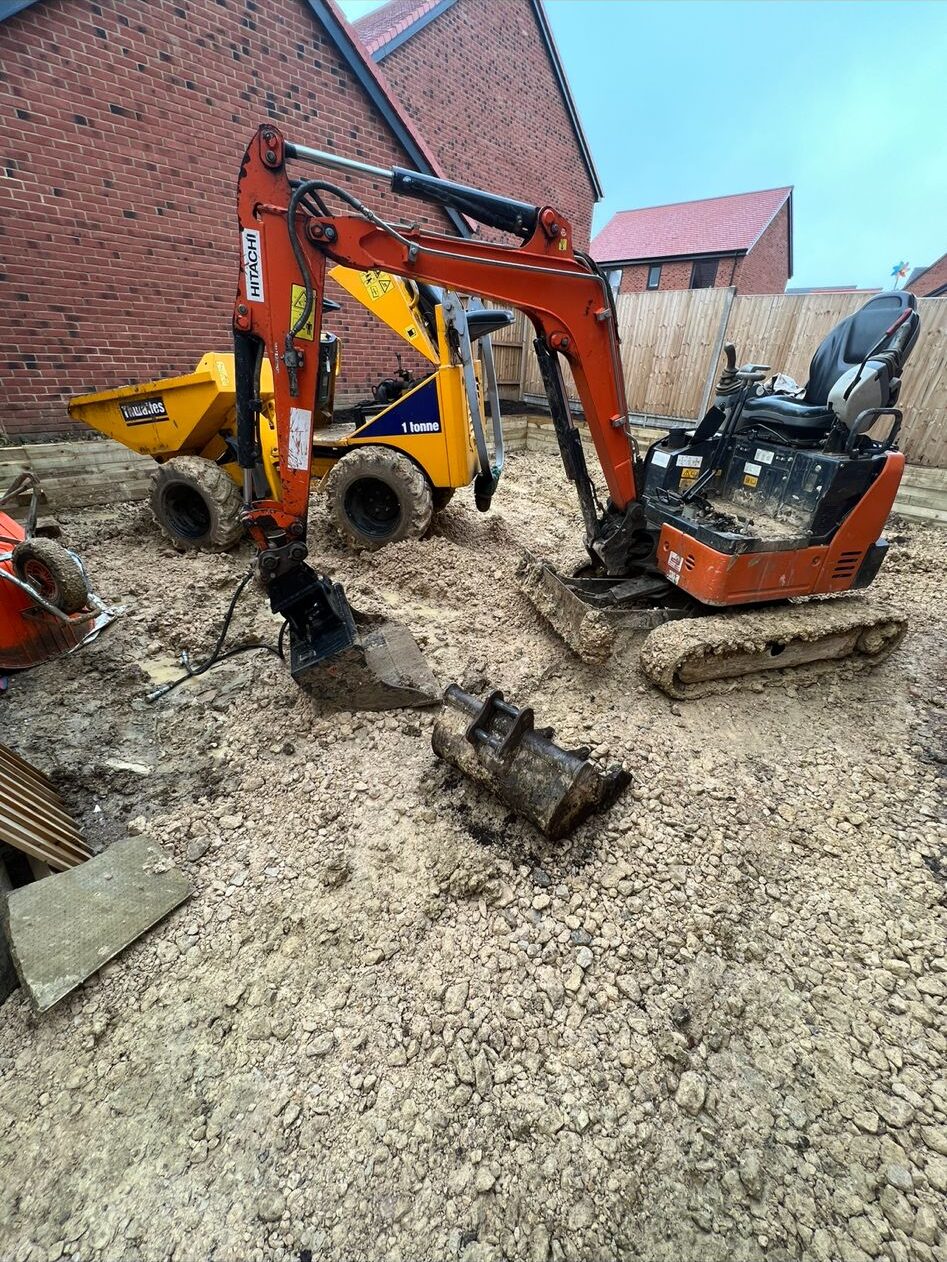
Microdigger (bobcat)
Brought in when access is tight. If the only way into the back garden is through a standard side gate and there’s no way to drop a fence panel or come in off the street, the microdigger goes through where the 2 tonne can’t.
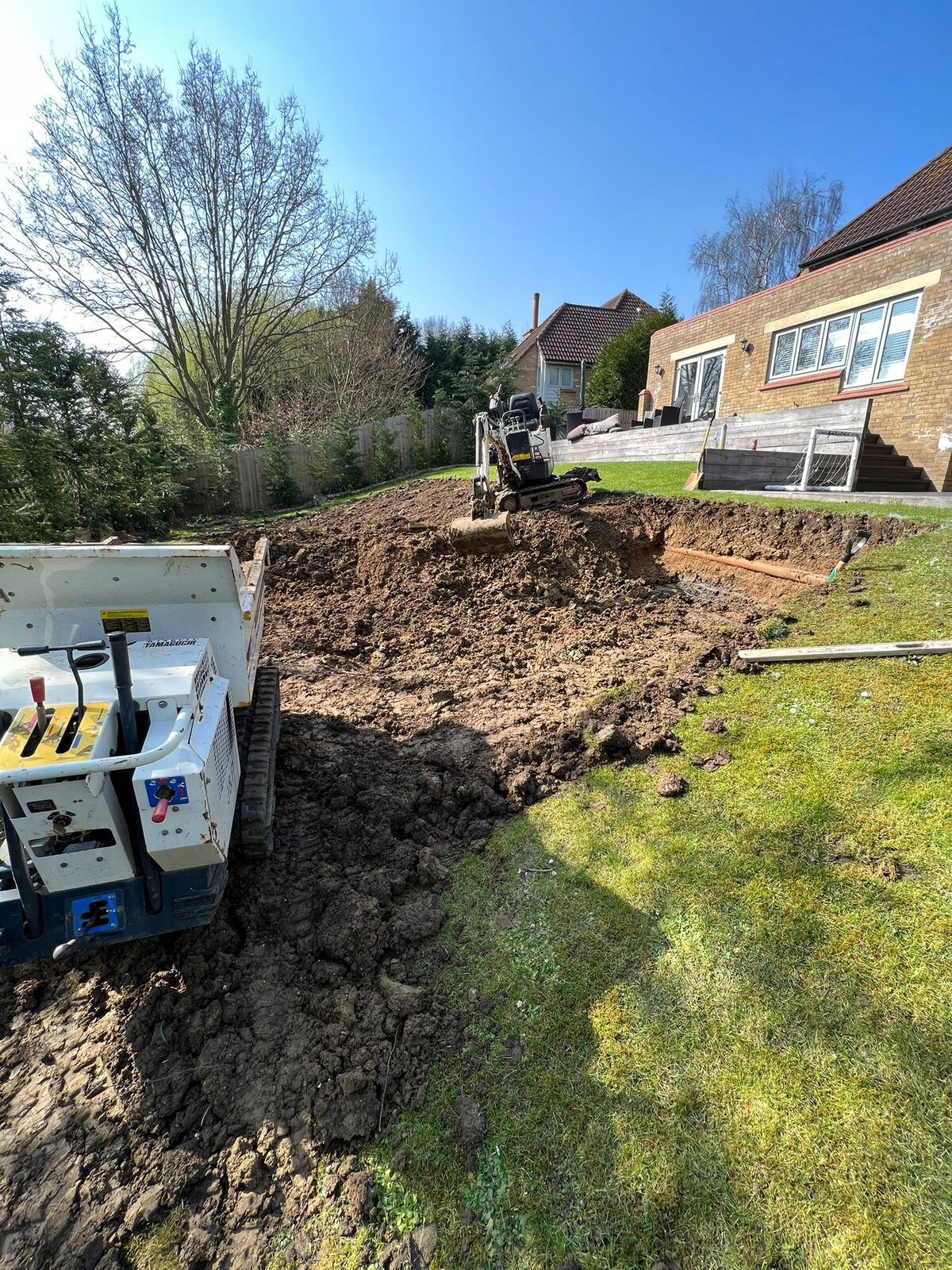
Track dumper
A 1 tonne capacity tracked dumper that fits through a garden gate alongside the microdigger. This is what moves spoil, hardcore, and topsoil around on site when a wheelbarrow would take twenty trips.
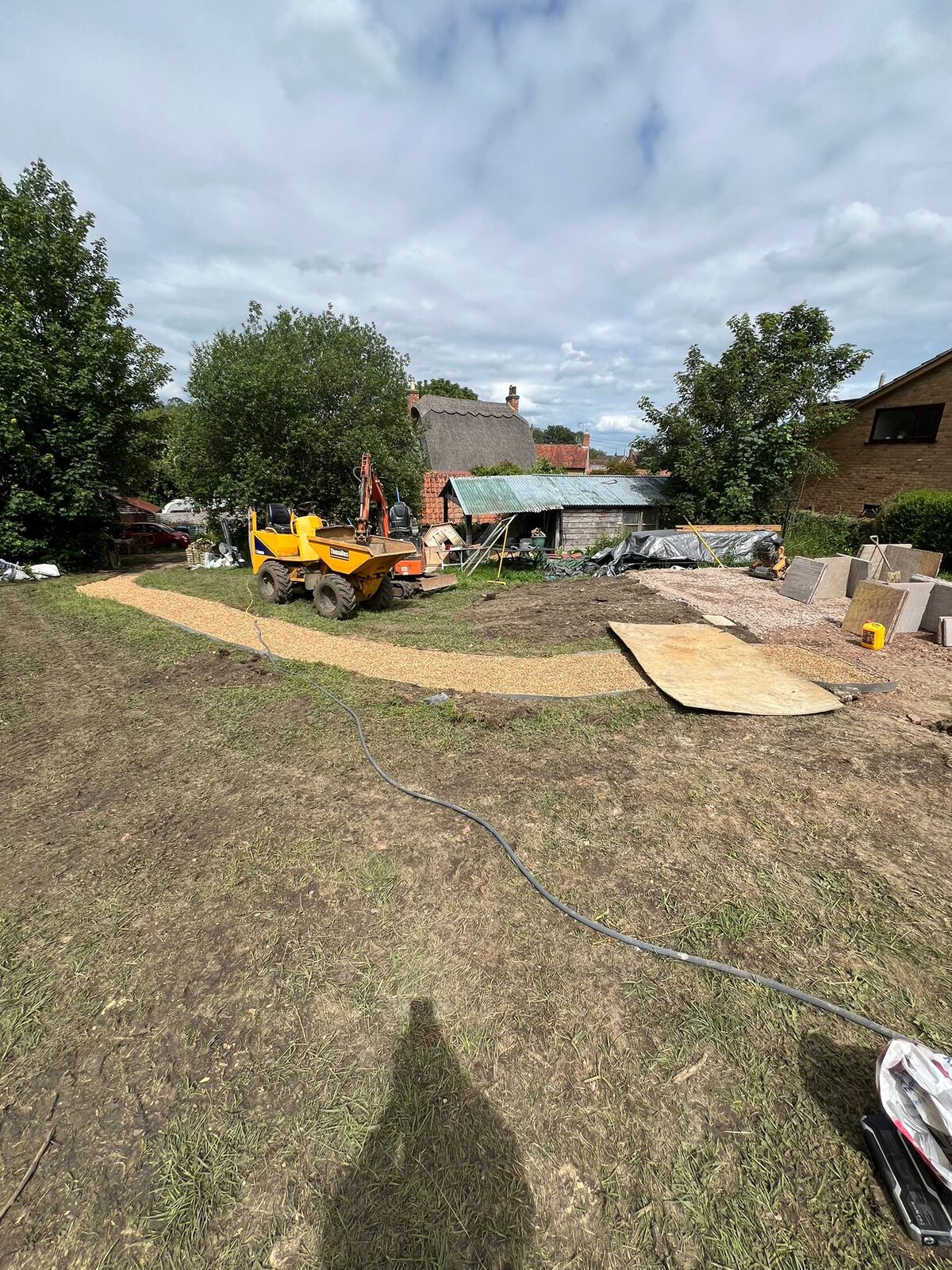
1 tonne dumper truck
For larger sites or where spoil needs to be moved further across a property.
This combination means most residential jobs in the area can be handled start to finish without needing to sub in outside plant. It also means Steve can quote accurately because he knows exactly what he’s bringing and what it can do.
Areas We Cover for Man and Digger Work
The three main towns we cover each have their own quirks when it comes to groundwork.
Bedford
Bedford and the surrounding villages (Kempston, Biddenham, Bromham, Sharnbrook) tend to have older properties with narrow side accesses, which is where the microdigger and track dumper earn their keep. We get a lot of extension footing work and driveway dugouts in MK40 and MK42 postcodes.
Milton Keynes
Milton Keynes is the opposite. Mostly newer estates with wider access but smaller gardens and lots of block paving. Wolverton, Newport Pagnell, Stony Stratford, Bletchley, and Willen see regular driveway work. MK estates also have strict rules around skip placement and verge damage, so planning how spoil leaves the site matters.
Northampton
Northampton covers more of a mix. Older terraces around Abington and Kingsley need careful hand-dig finishing after the main machine work because access is tight. Newer builds out toward Wootton and Great Billing are more open.
The villages between
In the villages between (Olney, Emberton, Sherington, Hanslope, Ravenstone) most jobs are extension footings and garden groundwork, and access tends to be easier. See the full list of areas we cover.
What a Typical Job Looks Like, Step by Step
- 1Site visit or video and photo assessment
Before quoting, the operator looks at access, ground type, and what the finish needs to be.
- 2Written quote
Day rate or fixed price, with spoil removal priced separately or included, and an expected duration.
- 3Machine delivered or driven to site
Smaller machines often arrive on a trailer behind the operator’s van.
- 4Services check and marking out
Underground services identified, dig area marked in paint or pegs.
- 5Excavation
The bulk of the work. A competent operator on a 2 tonne machine can shift more material in an hour than four people with spades can in a day.
- 6Finishing and hand dig
Corners, edges, and awkward bits tidied by hand so the next trade finds a clean site.
- 7Spoil away
Muck loaded into grab lorry, skip, or moved with the track dumper to a dump area.
- 8Tidy and walk-round
Driveway, lawn, and neighbouring boundaries checked for any damage before the operator leaves.
Tips That Save You Money and Hassle
A few things that reliably keep groundwork jobs under budget and on schedule.
Spring and early autumn are busiest. Midwinter (if the ground isn’t frozen) often has better availability.
If you’ve got a driveway and a bit of garden clearance, doing both on the same day usually works out cheaper than two callouts.
If you’ve got a low spot in the garden, topsoil from a dugout can go there instead of paying to take it away.
Changing your mind mid-dig costs time and money.
Old pipes, concrete footings from long-gone sheds, and cables are common. A quick walk round with the operator before starting saves you both a headache later.
If the only way in is through a 750mm side gate, say so upfront. The right small machine and track dumper combination will get in where a bigger digger can’t, but the operator needs to know before loading up.
Common questions
Man and Digger FAQs
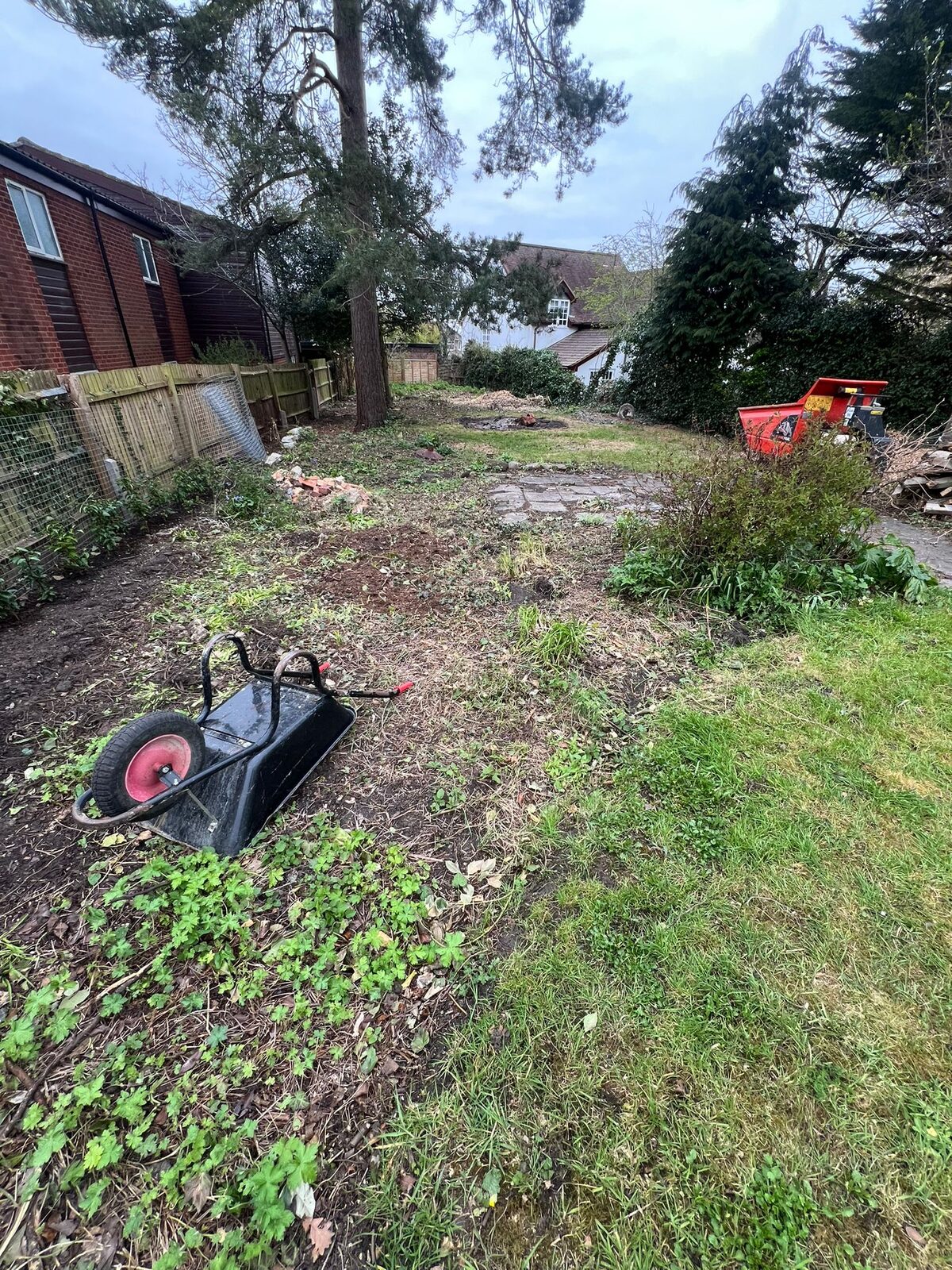
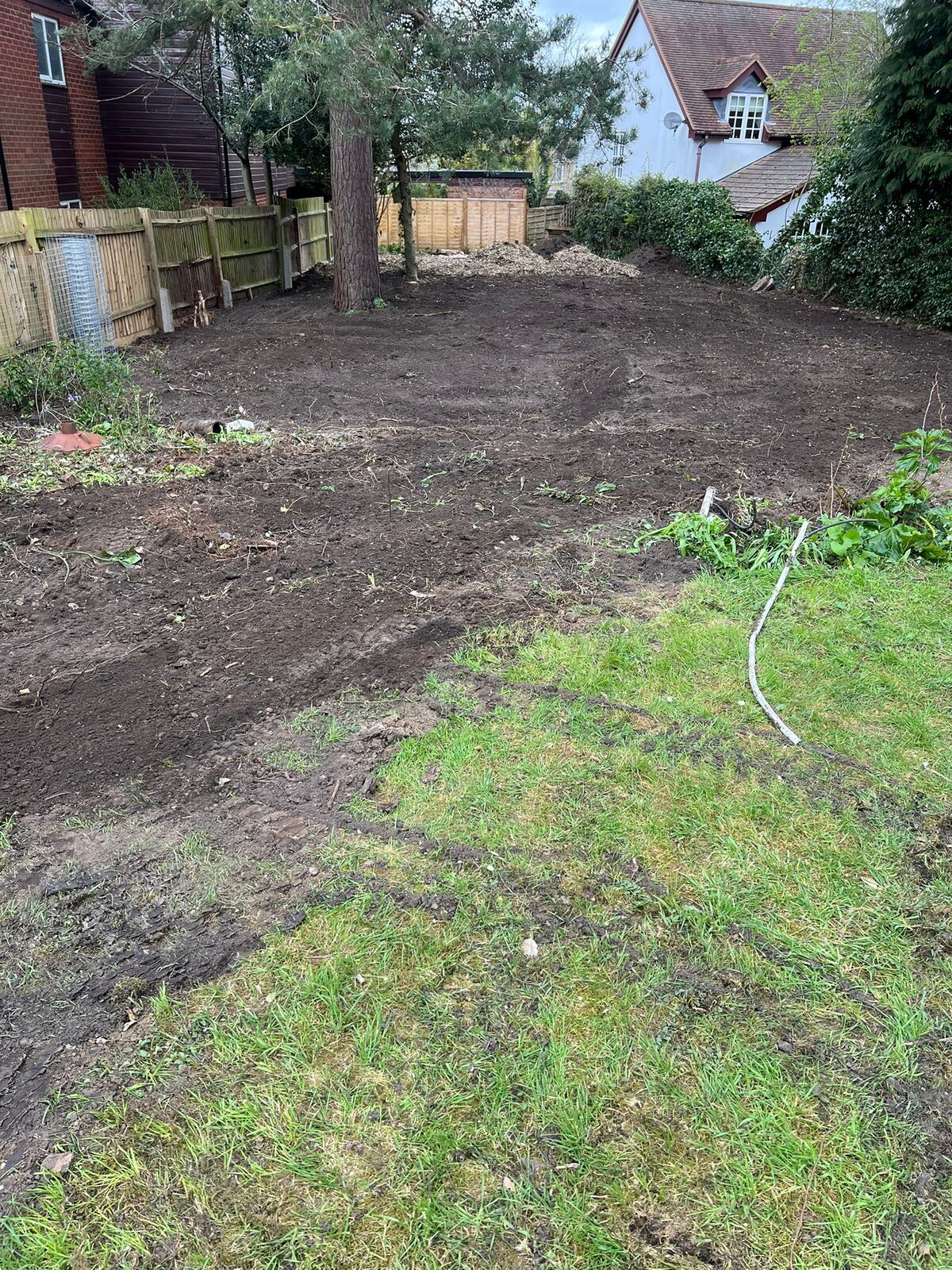
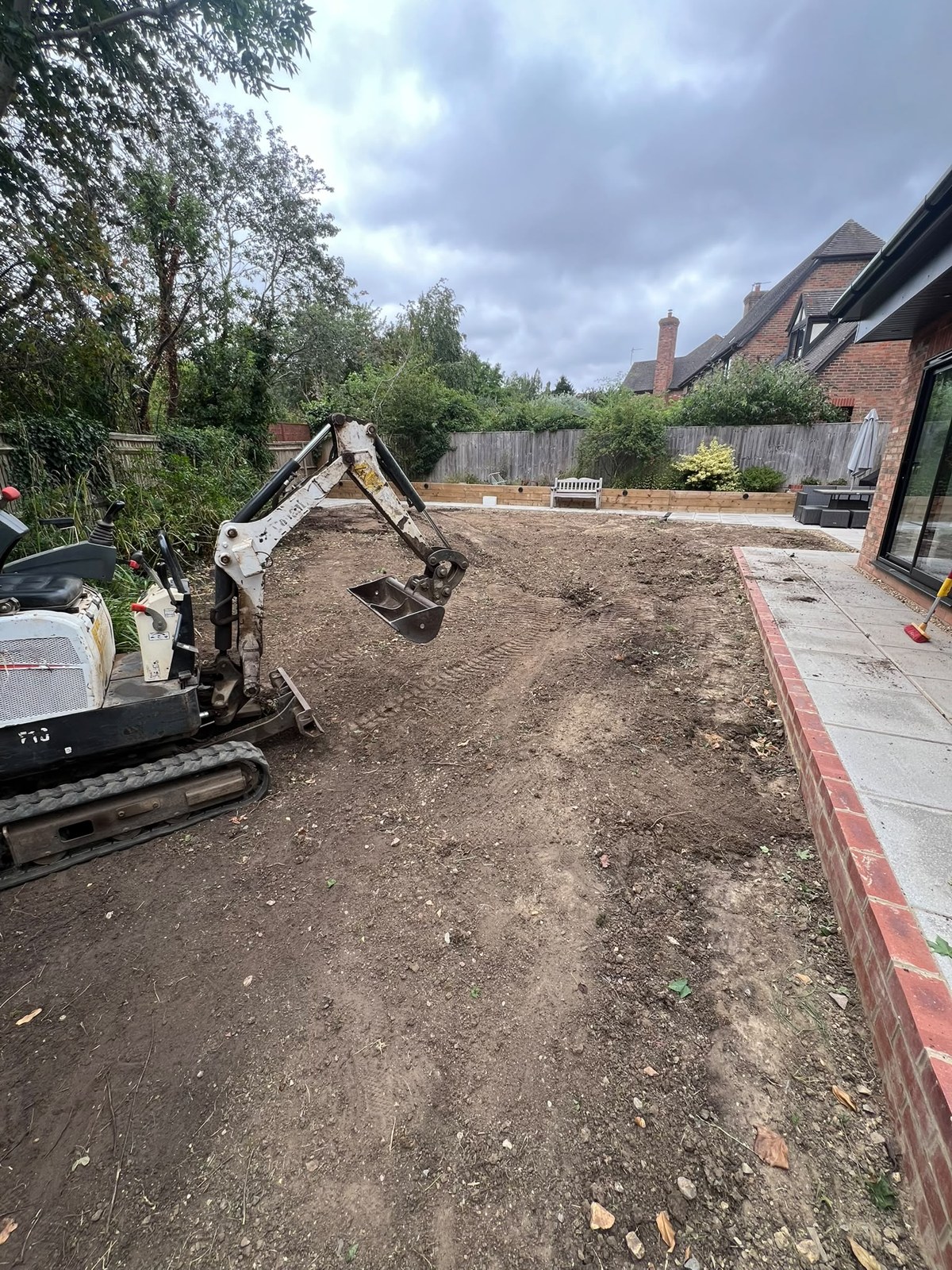
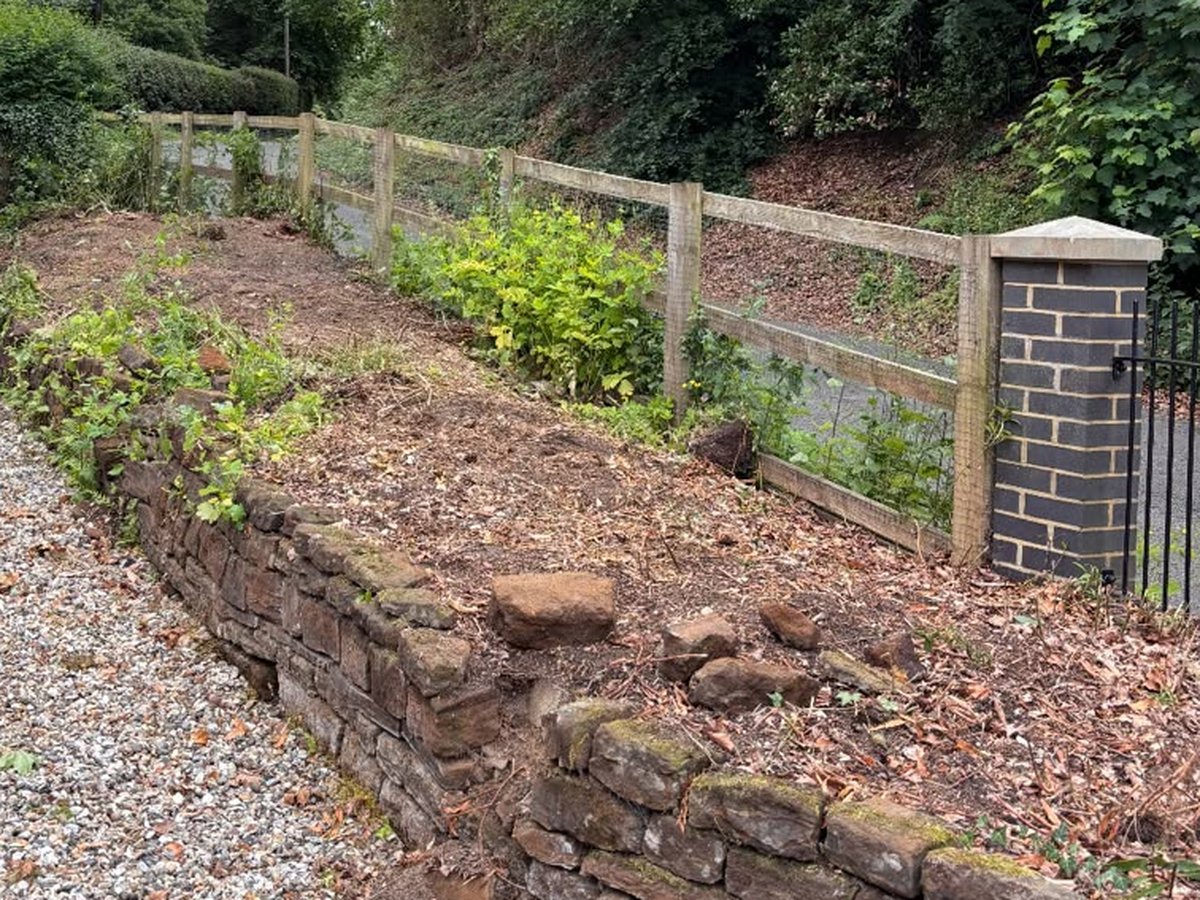
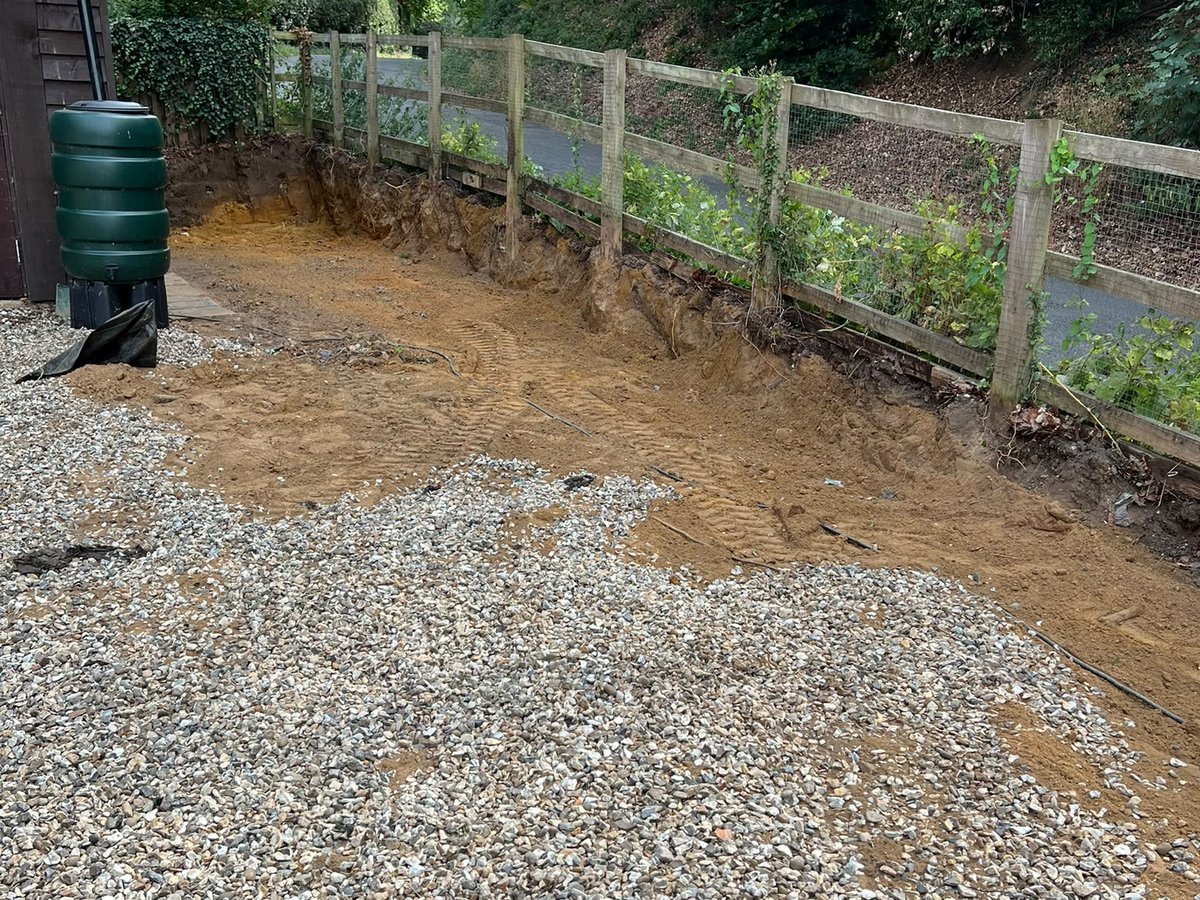
Before and after
Drag the slider
 BeforeAfter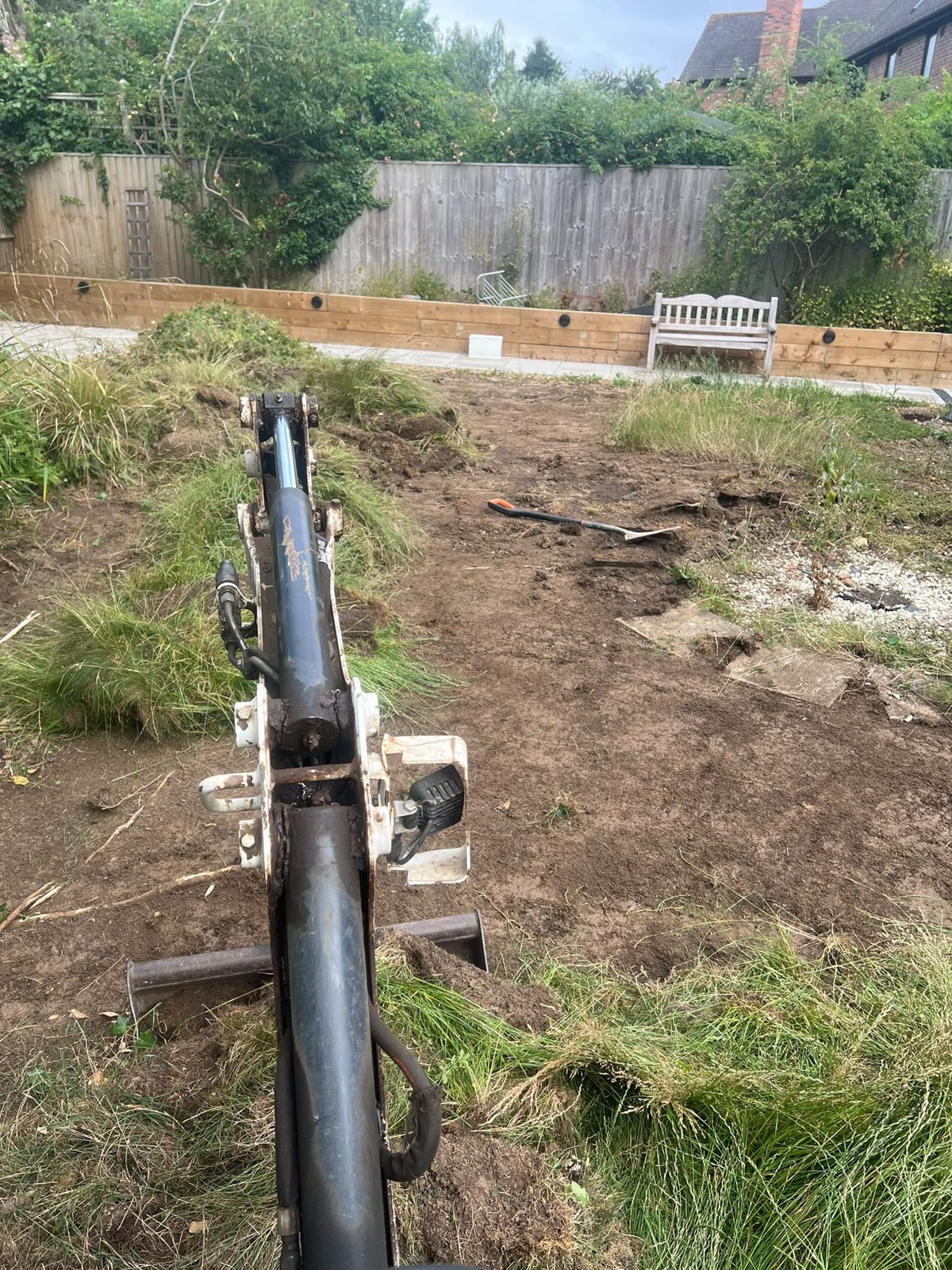
 BeforeAfter
 BeforeAfter
Why people book Steve
One man. His machines. No run-around.
And drives the machines himself. No call centre, no crew roulette.
After a proper look at access and ground, not down a phone line.
Compact fleet chosen for side gates and shared paths.
Spoil handled, paving washed, gate latched, walk-round done.
What our clients say
Rated 4.9★ by local customers
“Steve completed preparation work for a building project in Chapel Brampton , excellent work and on time ,I will be using Steve again on the next phase of the project, we were very pleased with his work .”
“Just had Steve over to clear a front and rear lawn over 200sqm with his digger. He was very prompt and professional worked tirelessly to ensure all work was completed. His attention to detail was spot on and did a great job I will be using him again”
“Steve did a great job in digging out my front lawn and grassy area by the side of my driveway and loading the mess into the skip. Tidied up the surrounding area well and would recommend if you need any digging done.”
“Steve has just finished adding a soak away for us and I fully recommend him. He was professional, very helpful and took time to understand what we needed. He’s prompt to get back to questions, punctual, considerate of neighbours and careful to clean up. No added charges or complications and very easy to work with.”
“Had my entire patio completed with these guys. The care that was taken during this job was unmatched- from initial prep work, to polishing off the final product. No corners cut, no stone out of place. I’d like to say thank you again to the team and I would definitely recommend them to anyone looking for an new patio”
“I couldn’t be happier with the work Steve (MK Landscaping Services) did! We needed our garden levelled and he was so professional and listened to every detail. I asked for a few tree holes to be dug that turned out to be harder than expected due to our clay soil. But Steve was a true professional…”
“We recently hired MK Landscaping to tackle my overgrown front garden, and I couldn’t be more thrilled with the results! From start to finish, Steve displayed professionalism and efficiency that truly set him apart. When they arrived, my front yard was an overgrown lumpy wild mess, but they worked…”
“Had my garden levelled and it was a great service and end product I received 😊 would recommend!”
“MK Landscaping did a complete front garden make over and we were bowled over, excellent job keeping well in budget, will totally recommend and a great team”
“Skilled and experienced, Steve did a fantastic job laying our patio. He was extremely good with communication and is efficient and polite.”
“A great job taking our very uneven, rubble like garden and transforming it into a beautiful level lawn! Steve was so efficient, thorough and tidy and we couldn’t be happier with the results. Would highly recommend!”
“I needed some levelling off, foundations digging and a garden pathway digging out. Steve did a great job and got it all done in a day. He arrived bang on time and only stopped for a couple of drinks. Would recommend.”
“We contacted a few local landscaping companies for a large amount of ground work to be completed in our garden… It was such an easy decision to choose Mk landscaping services!! Prompt to respond, reasonably priced, and very knowledgeable. So pleased with the end result!! Highly recommended!!”
“I would highly recommend this company. We wanted an old, large water feature removed and the garden levelled out ready for planting up. Steve was reliable, friendly and approachable and very professional. The work was done on time and there were no hidden costs.”
“Steve was brilliant, he arrived on time, fully explained what he would be doing… He was efficient and tidy and also advised me on the next steps of my garden plans. I highly recommend Steve, professional, efficient and friendly.”
“Steve and his digger cleared about 8 tons of Aquatic weed, removed from Pennyland boat basin loaded into a large skip and left the site tidy. Thanks for a good job Steve.”
“Highly recommend. Very hard worker! Steve worked very efficiently and fast to remove excess soil and weeds, level the uneven ground and leave a slight slope for drainage. Our driveway was left clean and tidy.”
“Really efficient and good job digging out a new parking area for us.”
“Steve completed preparation work for a building project in Chapel Brampton , excellent work and on time ,I will be using Steve again on the next phase of the project, we were very pleased with his work .”
“Just had Steve over to clear a front and rear lawn over 200sqm with his digger. He was very prompt and professional worked tirelessly to ensure all work was completed. His attention to detail was spot on and did a great job I will be using him again”
“Steve did a great job in digging out my front lawn and grassy area by the side of my driveway and loading the mess into the skip. Tidied up the surrounding area well and would recommend if you need any digging done.”
“Steve has just finished adding a soak away for us and I fully recommend him. He was professional, very helpful and took time to understand what we needed. He’s prompt to get back to questions, punctual, considerate of neighbours and careful to clean up. No added charges or complications and very easy to work with.”
“Had my entire patio completed with these guys. The care that was taken during this job was unmatched- from initial prep work, to polishing off the final product. No corners cut, no stone out of place. I’d like to say thank you again to the team and I would definitely recommend them to anyone looking for an new patio”
“I couldn’t be happier with the work Steve (MK Landscaping Services) did! We needed our garden levelled and he was so professional and listened to every detail. I asked for a few tree holes to be dug that turned out to be harder than expected due to our clay soil. But Steve was a true professional…”
“We recently hired MK Landscaping to tackle my overgrown front garden, and I couldn’t be more thrilled with the results! From start to finish, Steve displayed professionalism and efficiency that truly set him apart. When they arrived, my front yard was an overgrown lumpy wild mess, but they worked…”
“Had my garden levelled and it was a great service and end product I received 😊 would recommend!”
“MK Landscaping did a complete front garden make over and we were bowled over, excellent job keeping well in budget, will totally recommend and a great team”
“Skilled and experienced, Steve did a fantastic job laying our patio. He was extremely good with communication and is efficient and polite.”
“A great job taking our very uneven, rubble like garden and transforming it into a beautiful level lawn! Steve was so efficient, thorough and tidy and we couldn’t be happier with the results. Would highly recommend!”
“I needed some levelling off, foundations digging and a garden pathway digging out. Steve did a great job and got it all done in a day. He arrived bang on time and only stopped for a couple of drinks. Would recommend.”
“We contacted a few local landscaping companies for a large amount of ground work to be completed in our garden… It was such an easy decision to choose Mk landscaping services!! Prompt to respond, reasonably priced, and very knowledgeable. So pleased with the end result!! Highly recommended!!”
“I would highly recommend this company. We wanted an old, large water feature removed and the garden levelled out ready for planting up. Steve was reliable, friendly and approachable and very professional. The work was done on time and there were no hidden costs.”
“Steve was brilliant, he arrived on time, fully explained what he would be doing… He was efficient and tidy and also advised me on the next steps of my garden plans. I highly recommend Steve, professional, efficient and friendly.”
“Steve and his digger cleared about 8 tons of Aquatic weed, removed from Pennyland boat basin loaded into a large skip and left the site tidy. Thanks for a good job Steve.”
“Highly recommend. Very hard worker! Steve worked very efficiently and fast to remove excess soil and weeds, level the uneven ground and leave a slight slope for drainage. Our driveway was left clean and tidy.”
“Really efficient and good job digging out a new parking area for us.”